FACC 511: Instructional Design in Engineering Education
Issuer: Faculty of Engineering, McGill University
This one-semester credited course focuses on designing engineering courses at the university level. It covers key aspects such as writing course outlines, designing class activities and assessments, and developing evidence-based instructional methods to promote inclusive engineering learning. Additionally, the course introduces the Canadian Engineering Accreditation Board (CEAB) Graduate Attributes, which are essential in structuring engineering curricula in Canada.
CEAB Graduate Attribute
In Canada, every accredited engineering program of all institutions aligns with the CEAB Graduate Attributes framework, which defines 12 essential competencies for engineering graduates. These attributes ensure that graduates are:
- Competent, well-rounded, and prepared for professional engineering licensing path (e.g., P.Eng.).
- Equipped with technical, ethical, and professional skills required for real-world applications.
- Meeting high-quality professional standards in engineering education.
- Benefiting from global recognition and licensure mobility.
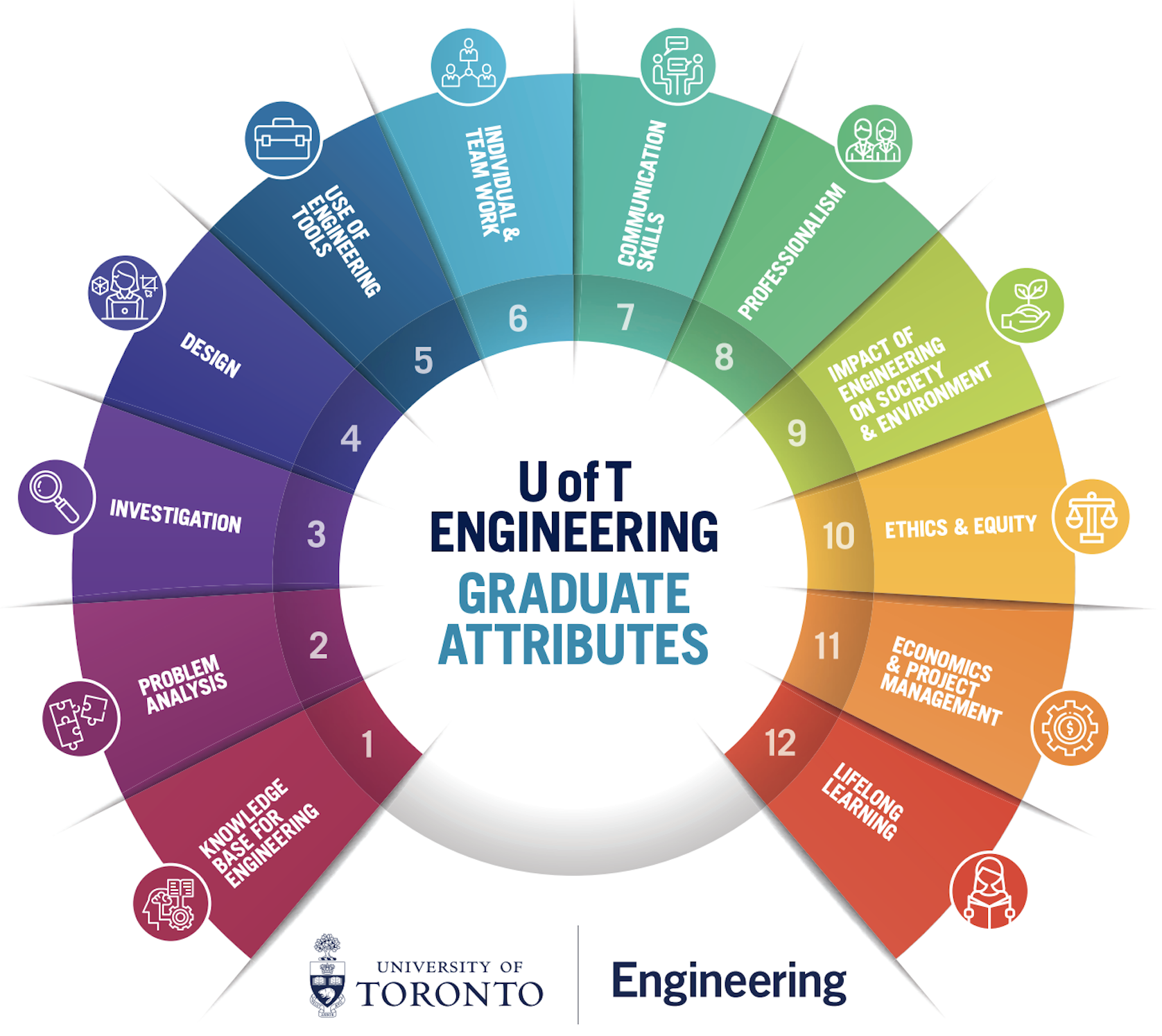
During this course, I gained in-depth exposure to these 12 graduate attributes and their sub-attributes. Even today, I continue to use this framework to guide my own professional development and mentor my students in their Individual Development Plans (IDPs) for continuous learning and career growth as future professional engineers.
Bloom’s Taxonomy and Learning Objectives
As part of the course, we were required to write a course outline, which involved defining learning objectives. For this purpose, Bloom’s Taxonomy is commonly referenced. Bloom’s Taxonomy is a hierarchical classification of cognitive skills used in education to design curriculum, assessments, and instructional strategies.
Why is Bloom’s Taxonomy Important?
- Helps educators structure curriculum development by covering a range of cognitive skills.
- Ensures that assessments go beyond memorization and test higher-order thinking.
- Encourages active learning strategies that push students toward deeper engagement and understanding.
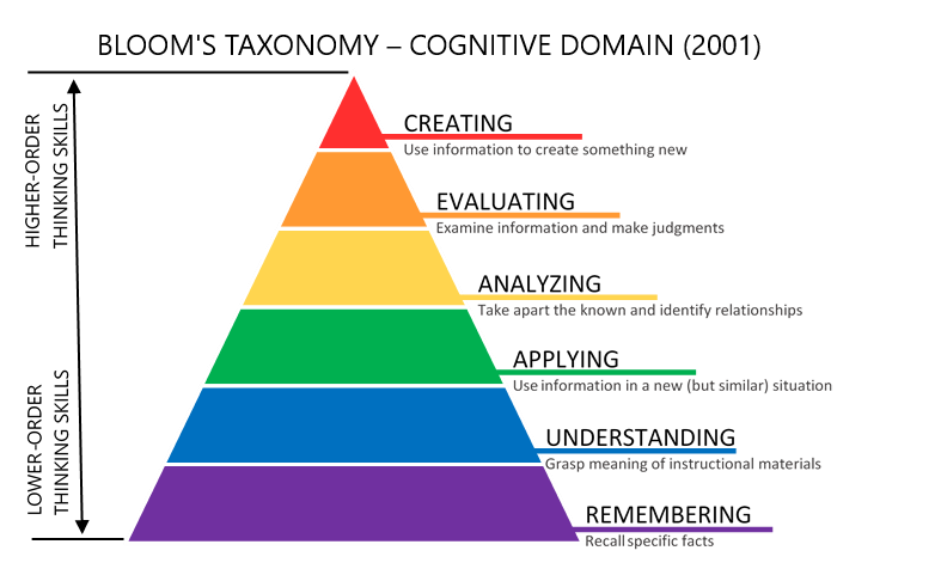
Below is an example of how Bloom’s Taxonomy can be applied to teaching thermodynamics in engineering education:
- Remember: Define the first and second laws of thermodynamics.
- Understand: Explain how entropy affects heat engines.
- Apply: Solve a thermodynamics problem in a Rankine cycle.
- Analyze: Compare the efficiency of two different thermodynamic cycles.
- Evaluate: Assess the feasibility of using a new fuel (e.g. syngas, ammonia, metals) in a real-world energy system.
- Create: Design an innovative combustion system for sustainable energy production.
Instructional Methods and Active Learnings
Another key aspect of the course was designing instructional methods. A strong emphasis was placed on active learning, an approach that directly engages students in the learning process. Active learning strategies that I implement in my teaching include students coming to the board to explain concepts, problem-solving activities, either individually or through group discussions, and collaborative hands-on experiments to reinforce theoretical concepts.
Unlike passive learning, where students primarily listen to lectures, active learning enhances critical thinking, deepens understanding, and improves knowledge retention by requiring students to apply concepts in real-time. Studies have shown that active learning leads to higher academic performance and greater student motivation, making it a particularly effective strategy in STEM education (Freeman et al., 2014, Theobald et al., 2020).
While active learning is highly effective, it also comes with challenges:
- Time Constraints — Active learning takes more time, which may reduce the amount of material covered in a class session.
- Student Preferences — Some students, especially those who prefer working alone, may struggle with group-based active learning strategies.
- Classroom Management — In large classes, active learning can be difficult due to space limitations and challenges in monitoring engagement.
For this reason, Instructors should carefully observe the classroom dynamics and adapt their teaching methods based on the real situation. Instructors may also consider balance active learning with other instructional strategies, such as inductive learning, flipped learning, traditional lectures, or blended learning approaches, depending on the course context and student needs.
Final Thoughts
This course has been instrumental in shaping my understanding of instructional design in engineering education. Exposure to CEAB Graduate Attributes, Bloom’s Taxonomy, and active learning strategies has strengthened my ability to design effective, inclusive, and engaging learning experiences. These methodologies will continue to guide my approach to teaching and mentoring.