Introduction to Rotating Equipment
Issuer: PETRONAS Institution of Petroleum Technology (INSTEP)
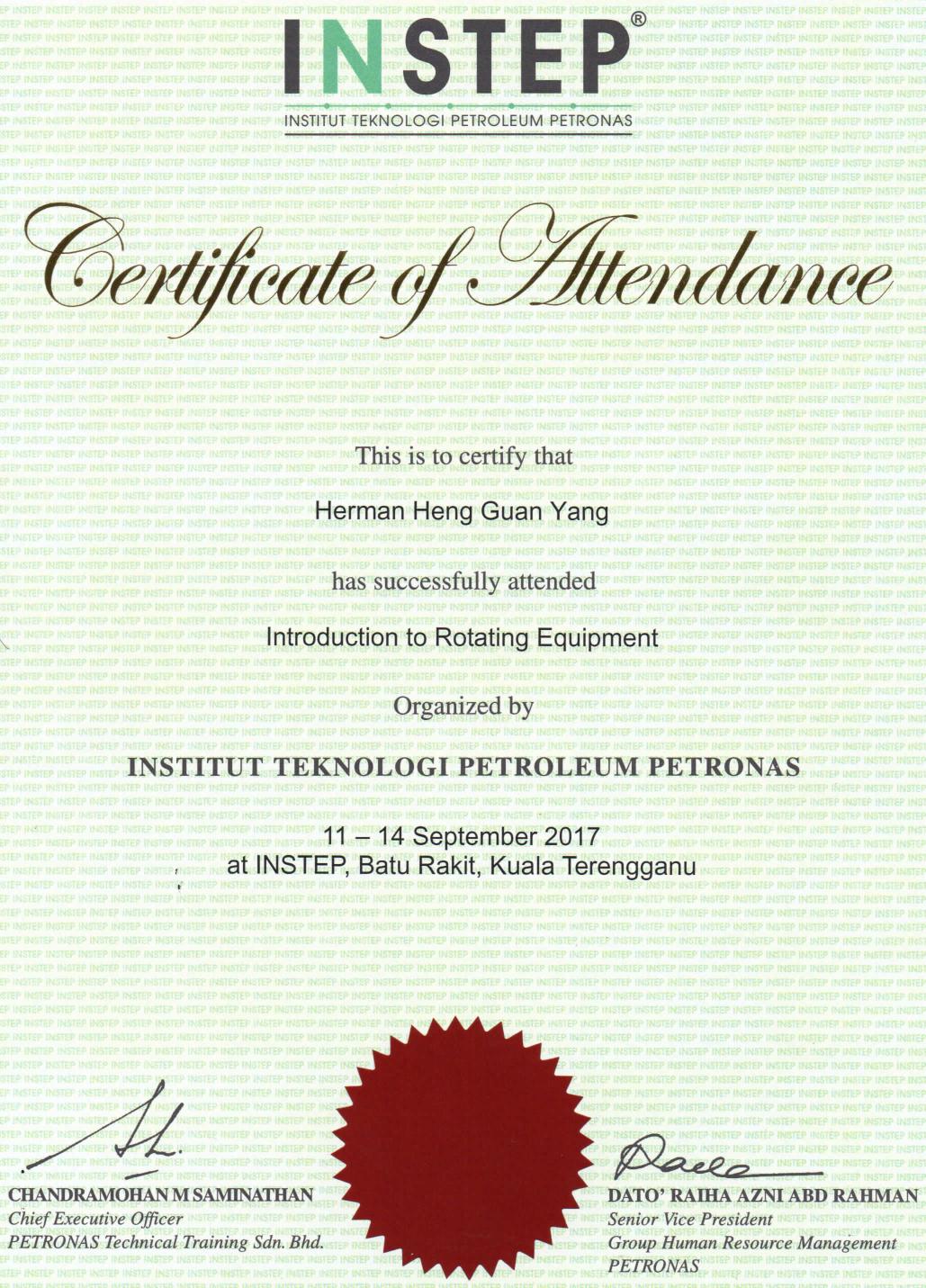
INSTEP is a training centre of PETRONAS, which is an oil and gas company in Malaysia wholly owned by the Malaysian government. I was fortunate to be sponsored by Petrofac Malaysia Limited to attend their 4-day course at their training centre in Terengganu, the East Coast of Malaysia.
Rotating Equipment is an important pillar of Mechanical Engineering. A lot of machines around us in our daily life are rotating equipment. These include engines, pumps, generators, compressors, etc., and they are one of my favourite topics in mechanical engineering.
In the oil and gas industry where fluid movements are critical in production optimization, so understanding the principles of rotating equipment is essential for engineers. If you are a mechanical engineering student, chances are you will learn a lot about rotating equipment in fluid mechanics and thermodynamics. Often, students and engineers can better appreciate this topic if they have some hands-on experience with these machines in addition to the theories learned in classes. While most universities offer laboratory courses on fluid mechanics and thermodynamics, INSTEP also offers training courses on these topics.
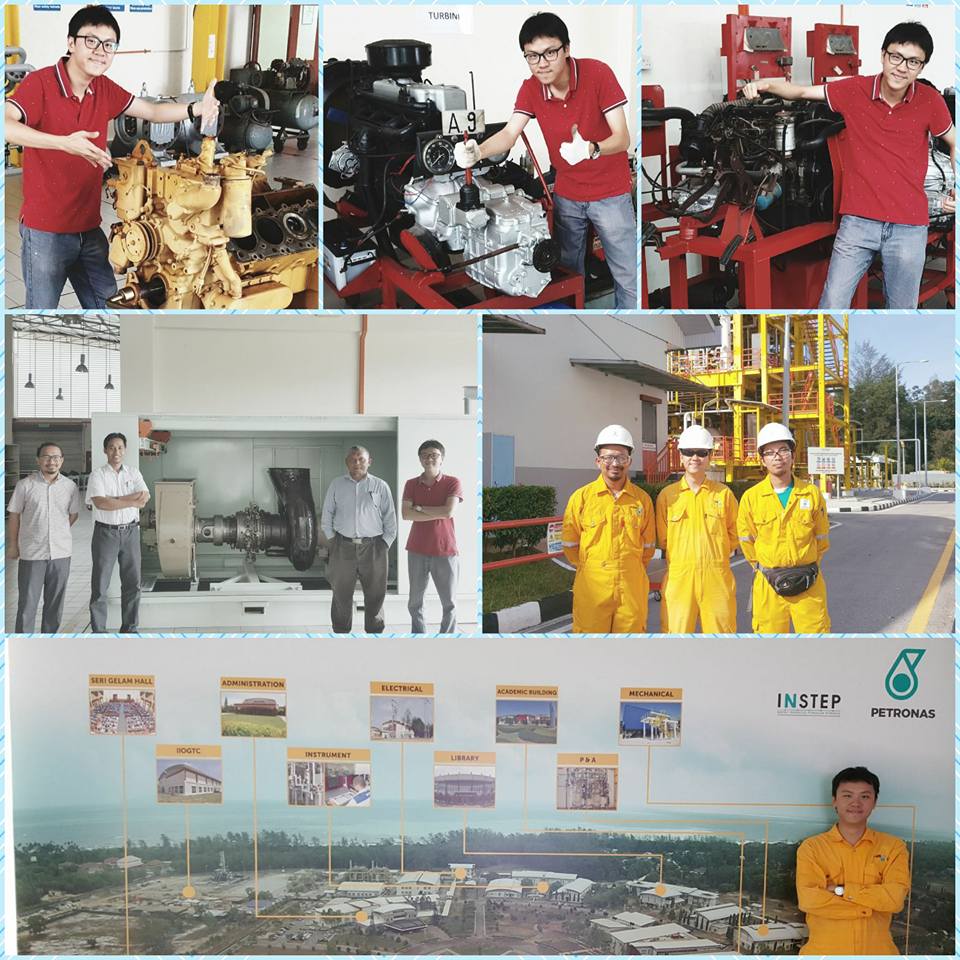
The things I like about INSTEP is they have a very good balance between the theorietical and practical training. It is worth mentioning that their training facilities have a training plant that consists of all this rotating equipment at a larger scale to enhance better understanding, which is normally not available in most universities.
Rotating Equipment
Below is some basic information about different pieces of rotating equipment for non-engineering professionals:
Pump:
In our body, we need our hearts to keep blood circulating. Pumps are just like our hearts that move fluids (liquids or gases). Pumps require motors that convert electrical energy to mechanical energy to pump the fluids. Please note that oil and gas offshore plants may not use pumps for oil extraction from reservoir to surface if reservoir pressure is sufficiently high. Nonetheless, pumps are still necessary in oil and gas plants for water and chemical injections.
Compressor:
Similar to pumps, compressors move fluids in a system. The difference between compressors and pumps is that pumps can move liquids or gases, while compressors can only move gases. This is because liquids (such as water) in engineering are considered "incompressible", i.e. the density remains constant.
Engine:
Imagine you feel cold during the winter, so you rub your hands together to produce some heat. You do some mechanical work to produce heat. However, it is more difficult to do the reverse, i.e. producing heat from mechanical work. You need a special mechanical device called an engine. Engines consume energy because fuel needs to be burned in order to produce sufficient heat energy for mechanical work production.
Generator:
Similar to engines, generators consume fuel. While engines produce mechanical energy, generators convert mechanical energy to electrical energy. Generators are the reverse of motors that convert electrical to mechanical energy. In offshore plants, it is common to use fuel gas from the reservoir as the source of mechanical energy for generators. In our residential areas, we can use clean energy such as wind and hydro as the source of mechanical energy for generators to produce electricity to power our homes.